Dental implants can be an effective way to replace missing teeth, restore chewing function, and improve your smile.
However, the cost of treatment can be a concern, especially if you need more than one implant.
Finding dental insurance that covers implants can help reduce your out-of-pocket expenses, but not every dental insurance policy includes implant benefits.
Some dental insurance plans cover a percentage of eligible implant procedures, while others exclude implants or impose waiting periods, annual maximums, and other restrictions. Even when a plan advertises implant coverage, it may not pay as much as you expect.
The key is to understand exactly what a policy covers before enrolling or scheduling treatment.
Key Takeaways
- Some dental insurance plans cover implants: Coverage depends on the insurer, individual policy, state, and specific benefits included in your plan.
- Insurance rarely pays the entire bill: Annual maximums, deductibles, coinsurance, and procedure exclusions can leave you responsible for a significant portion of the cost.
- Check waiting periods and missing-tooth clauses: A policy may not cover implants immediately or may exclude replacement of teeth lost before coverage began.
- Compare the actual benefits, not just premiums: Review implant coverage, annual limits, provider networks, and out-of-pocket costs before choosing a plan.
Does Dental Insurance Cover Dental Implants?
Yes. Some dental insurance plans cover dental implants, but coverage varies significantly between policies.
Dental implants are generally classified as major restorative dental procedures. Depending on the policy, an insurer may cover part of the implant placement, abutment or implant-supported crown. Other plans may exclude implants entirely or cover alternative tooth replacement treatments, such as bridges and dentures, instead.
Even when implants are included, the insurer may only pay a percentage of eligible expenses after you meet your deductible. Your annual maximum may also limit how much the insurance company contributes during the year.
For example, imagine your implant treatment costs $4,000, and your insurance plan covers 50% of eligible expenses. You might expect the insurer to pay $2,000.
However, if the plan has a $1,000 annual maximum and you have already used $200 in benefits, the insurer may pay no more than the remaining $800, assuming the treatment is otherwise eligible.
This is why checking the complete policy is important.
According to Cigna, full coverage dental insurance may include major restorative treatments such as implants, but full coverage does not mean the insurer pays 100% of every dental bill.
What Dental Insurance Plans Cover Implants?
Several dental insurance companies offer plans that include dental implant benefits. However, availability, coverage percentages, waiting periods, and annual limits depend on the specific policy and your state.
Here are some providers worth investigating when comparing dental insurance for implants.
1. Anthem
Anthem offers dental plans that may include coverage for dental implants.
Forbes Advisor’s October 2026 review identified the Essential Choice PPO Incentive as its top overall choice for implant coverage. The reviewed plan offered 30% implant coverage from the first year, with no waiting period. Benefits could increase to 40% in the second year and 50% in the third year when preventive visits were completed, according to the plan terms reviewed.
The example plan also had a $2,500 annual maximum.
Before enrolling, check whether the plan is available in your state, whether your dentist participates in its network, and whether the coverage applies to your proposed implant treatment.
2. Ameritas
Ameritas offers dental insurance options that may include implant coverage.
Its PrimeStar Care Boost plan was identified by Forbes Advisor as a budget-friendly option in its 2026 comparison.
The reviewed plan offered:
- 20% implant coverage in the first year.
- 50% coverage from the second year onward.
- No implant waiting period.
- An implant-specific maximum of $750 in the first year and $1,000 in subsequent years, according to the reviewed plan.
These limits are important. A plan can advertise 50% implant coverage but still restrict the actual amount it pays.
Check the current policy documents for availability, pricing, and exclusions.
3. Delta Dental
Delta Dental offers different individual and employer-sponsored dental plans across the United States. Some policies may include benefits for dental implants, while others may exclude them or impose restrictions.
When comparing Delta Dental plans, look for:
- Whether implant placement is covered.
- Whether implant-supported crowns and abutments are included.
- The annual maximum.
- Any waiting period for major procedures.
- Whether replacement of previously missing teeth is excluded.
Do not assume that every Delta Dental policy provides the same implant benefits. Check here for a list of Delta Dental dentists on Quick Dentist Finder
4. MetLife
MetLife offers individual and employer-sponsored dental insurance options. Certain plans may provide benefits for implant treatment.
However, coverage can come with restrictions. Some policies may impose waiting periods, frequency limitations, or missing-tooth clauses.
For example, a policy may restrict coverage for replacing a tooth that was missing before the insurance became effective.
Review the policy’s schedule of benefits and exclusions before enrolling. Check here for a list of MetLife dentists on Quick Dentist Finder.
5. Guardian
Guardian offers dental insurance plans with varying levels of restorative coverage. Some options may include dental implants.
Certain Guardian plans have implant-specific limits, including waiting periods and lifetime maximums.
When comparing policies, confirm whether the plan covers the implant itself, the surgical placement and the final restoration.
6. Spirit Dental
Spirit Dental offers dental insurance plans that may include benefits for major restorative procedures, including implants.
Some of its plans have been identified in insurance comparisons for offering implant benefits without a traditional waiting period.
However, no waiting period does not automatically mean unlimited or full coverage. Deductibles, annual maximums, reimbursement percentages and other restrictions can still apply.
7. UnitedHealthcare
UnitedHealthcare offers individual and employer-sponsored dental insurance plans. Implant coverage depends on the particular policy and state.
Some plans may include implant benefits, while others may have restrictions on specific procedures or require additional coverage options.
Before purchasing a plan, confirm whether implants are covered under major restorative services and whether the policy has an implant-specific maximum. Check here for a list of United Health Care dentists on Quick Dentist Finder.
Important: These providers are starting points for comparison, not a universal ranking. Insurance products and benefits change. Always request the current plan documents and verify coverage directly with the insurer.
What Does Dental Insurance Pay for Dental Implants?
Dental insurance may cover a percentage of eligible implant expenses, but the amount depends on the policy.
Some plans cover implants under major restorative services, while others use separate implant benefit limits.
The following factors determine how much financial assistance you may receive.
1: Implant coverage percentage
This is the percentage of eligible treatment costs the insurance company agrees to pay.
For example, if your policy covers 50% of an eligible $2,000 procedure, the insurer’s contribution would be $1,000 before considering other policy restrictions.
However, the percentage may apply only to the insurer’s allowed fee rather than the dentist’s full charge.
2: Annual maximum
An annual maximum is the highest amount your dental insurance company will pay toward covered services during a plan year.
For example, if your annual maximum is $1,500, your insurer generally will not pay more than that amount for all eligible dental treatments combined during the year.
This can be particularly restrictive if you need multiple implants.
3: Deductible
A deductible is the amount you must pay before your insurance begins contributing to eligible treatment costs.
For example, if your deductible is $50, you generally pay that amount before the insurer calculates its share of eligible expenses.
4: Coinsurance
Coinsurance is the percentage of eligible treatment costs you are responsible for after meeting your deductible.
If your plan pays 50%, you are generally responsible for the remaining 50%, subject to the plan’s rules and maximum benefits.
5: Implant-specific limits
Some policies have separate limits for implant treatment.
These may include a lifetime maximum, a maximum payment per implant or restrictions on how frequently an implant can be replaced.
Always check whether the limit applies to the surgical placement, restoration or the entire implant treatment.
What to Look for When Choosing Dental Insurance for Implants
Choosing dental insurance requires more than finding a company that advertises implant coverage. You need to understand how the policy works and whether its benefits match your treatment needs.
Here are six things to investigate.
1. Implant coverage percentage
Start by checking how much of the eligible implant treatment the insurer pays.
A policy offering 50% coverage may appear better than one offering 30%. However, a lower annual maximum or implant-specific limit could make the second plan more valuable.
Compare the actual amount the insurer is likely to contribute rather than relying on the advertised percentage.
2. Waiting periods
A waiting period is the amount of time you must remain enrolled before certain dental benefits become available.
Some insurance policies cover preventive care immediately but require members to wait several months before receiving benefits for major restorative procedures.
This can be a problem if you need an implant soon.
Check whether the policy has:
- A waiting period for implant placement.
- A separate waiting period for crowns or other restorations.
- Different benefits during the first and subsequent years.
Some policies offer immediate implant benefits, but they may still have other coverage restrictions.
3. Missing-tooth clauses
A missing-tooth clause is an important exclusion to investigate.
Some insurers may refuse to cover an implant if the tooth was already missing before your dental insurance coverage began.
For example, if you lost a tooth two years ago and purchase a new dental policy today, the insurer may exclude the implant intended to replace that tooth.
Ask the insurer whether its policy covers teeth that were missing before enrollment.
4. Annual maximums
Look beyond the coverage percentage and check the annual maximum.
A plan with 50% implant coverage and a $1,000 annual maximum may provide less financial assistance than a plan with 30% coverage and a $2,500 annual maximum, depending on the eligible treatment cost and other benefits already used.
5. In-network dentists
Some dental insurance plans use preferred provider networks.
Choosing an in-network dentist may help reduce your expenses because participating providers agree to negotiated fees.
Before enrolling, check whether qualified implant dentists in your area accept the policy.
You should also confirm whether the plan requires referrals or preauthorization.
6. Exclusions and alternative treatments
Some insurance policies cover bridges or dentures but exclude implants.
Others may cover the crown portion of an implant restoration but not the surgical placement.
Read the exclusions carefully and ask the insurance company to explain how it treats each stage of implant treatment.
How Much Do Dental Implants Cost With Insurance?
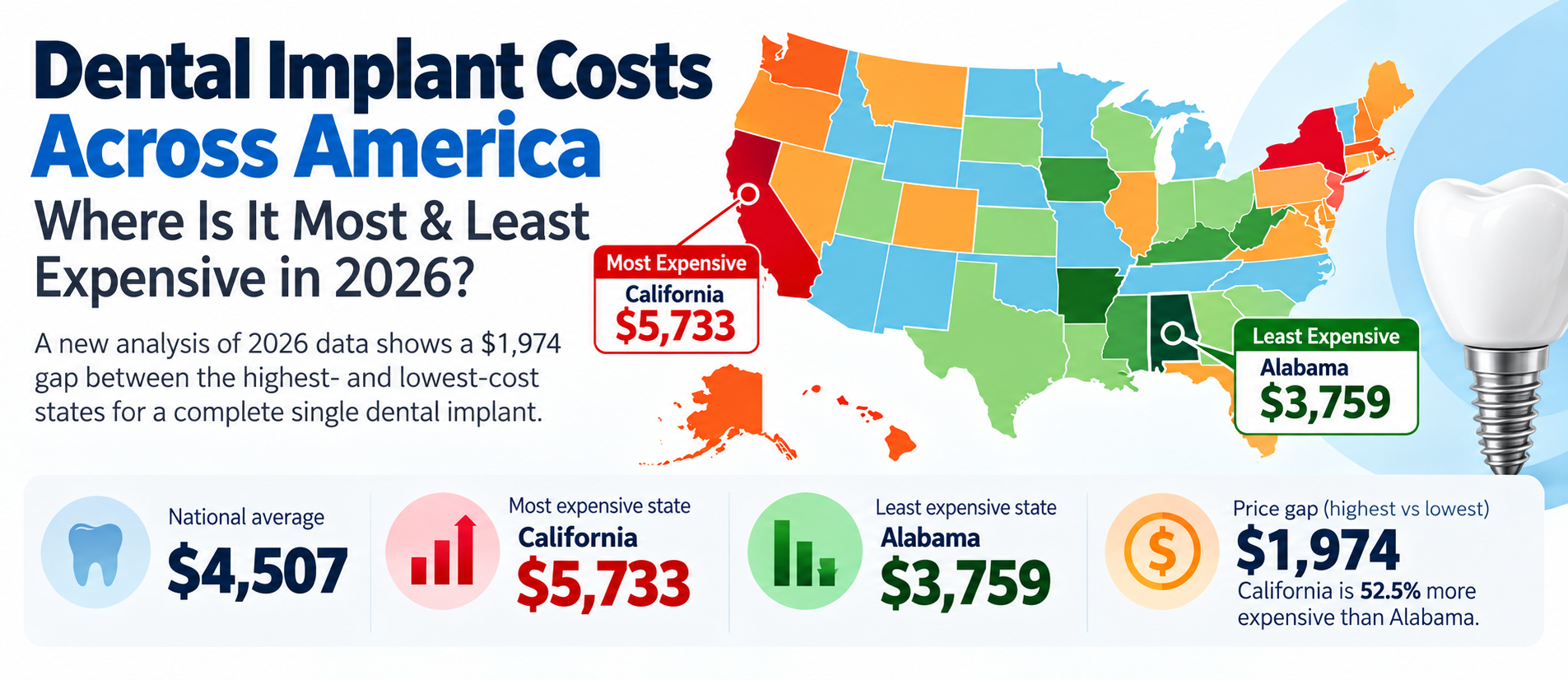
The cost of dental implants varies depending on the number of implants, the complexity of treatment, the dentist’s fees, and whether additional procedures are necessary.
Forbes Advisor’s 2026 research estimates that a single dental implant can cost approximately $3,000 to $7,000 without insurance when the implant, abutment, and crown are included.
However, this is a broad estimate rather than a guaranteed price. Your dentist must assess your individual needs before providing a treatment estimate.
Here is an illustrative example of how insurance limits can affect your expenses.
Imagine you need one dental implant with an eligible treatment cost of $4,000.
Your plan has:
- 50% implant coverage.
- A $1,000 annual maximum.
- A $50 deductible.
- No other benefits used during the plan year.
The calculation would look like this:
| Item | Amount |
| Eligible treatment cost | $4,000 |
| Deductible | $50 |
| Cost after deductible | $3,950 |
| Insurance contribution at 50% | $1,975 |
| Remaining patient responsibility | $2,025 |
However, because the plan has a $1,000 annual maximum, the insurer’s payment would be limited to $1,000.
Your estimated out-of-pocket expense would therefore be $3,000.
This is a simplified illustration. Actual claims depend on the insurer’s allowed fees, covered procedures, deductibles, exclusions, and benefit limits.
Does Dental Insurance Cover Implants for Missing Teeth?
Sometimes, but it depends on when the tooth was lost and the terms of your insurance policy.
Some dental insurance companies have missing-tooth clauses that exclude treatment intended to replace teeth lost before the policy started.
Other policies may cover implants regardless of when the original tooth was lost, subject to their usual limitations.
This distinction is important if you are purchasing insurance specifically because you already know you need an implant.
Before enrolling, ask your insurer:
- Does the policy cover replacement of teeth that were missing before enrollment?
- Is there a waiting period for implant treatment?
- Does the policy cover the implant post, abutment, and crown?
- Are there any restrictions based on when the original tooth was extracted?
Get the answers in writing whenever possible.
What If Your Dental Insurance Doesn’t Cover Implants?
If your insurance excludes implants or provides insufficient benefits, you still have options for managing the cost.
1: Consider dental financing
Some dental practices offer payment plans or work with third-party financing companies.
Depending on the provider, you may be able to spread the cost of treatment over several months.
Review the interest rate, repayment period, fees and eligibility requirements before agreeing to financing.
2: Ask about an in-house payment plan
Some dental clinics allow patients to pay for treatment in installments.
Ask whether the practice offers payment arrangements and whether a deposit is required before treatment begins.
3: Explore dental discount plans
Dental discount plans are different from traditional insurance.
Members typically pay a subscription or membership fee to access reduced fees from participating dental providers.
These plans do not reimburse dental expenses like insurance. Instead, they may help reduce the price you pay directly to the dentist.
Confirm that the plan includes implant services and that participating dentists are available in your area.
4: Compare treatment estimates
Consider obtaining treatment estimates from more than one qualified dental practice.
Compare the total cost, the procedures included, the materials used and the dentist’s proposed treatment plan.
A lower initial quote may not include necessary procedures such as bone grafting, extractions or the final crown.
5: Check whether medical insurance applies
In certain circumstances, medical insurance may cover specific dental or oral procedures that are integral to treating an underlying medical condition.
However, routine dental implant replacement is generally not covered simply because a patient has medical insurance.
Check your medical policy and ask your insurer whether your particular circumstances qualify.
How to Get Dental Implants Covered by Insurance
If you have found a dental insurance plan that includes implant benefits, take the following steps before beginning treatment.
Step 1: Confirm your implant coverage
Contact your insurer and ask whether the specific implant procedures recommended by your dentist are covered.
Step 2: Schedule a dental examination
Visit a qualified dentist or implant specialist for an examination. The dentist can assess your oral health, determine whether you are a suitable candidate, and recommend the appropriate treatment.
Step 3: Request a detailed treatment plan
Ask your dentist to provide an itemized estimate covering the different stages of treatment.
This may include:
- Implant placement.
- Abutment.
- Implant-supported crown.
- Tooth extraction, if necessary.
- Bone grafting or other preparatory procedures, if required.
Step 4: Request a pre-treatment estimate
Ask your dental office to submit the proposed treatment plan to your insurance company.
A pre-treatment estimate can help you understand which services may be covered and how much you may have to pay.
Remember that it is generally not a guarantee of final payment. The insurer will determine the final benefit when the claim is processed.
Step 5: Review your expected out-of-pocket expenses
Once you receive the insurance estimate, compare the expected insurance contribution with the total treatment cost.
Ask your dentist about payment arrangements if you still have a substantial balance.
Where Can You Find a Dentist Who Offers Dental Implants?
Finding the right dentist is just as important as choosing an insurance policy.
Dental implant treatment involves several stages, and the dentist needs to evaluate your oral health, jawbone condition, and suitability for the procedure before recommending treatment.
Quick Dentist Finder helps patients discover dental practices across the United States.
You can use the directory to explore dentists and dental clinics by location and investigate practices that offer services such as dental implants, restorative dentistry and other dental treatments.
When comparing implant providers, consider:
- Experience and training in implant dentistry.
- The services offered by the practice.
- Whether the dentist accepts your dental insurance.
- The estimated total treatment cost.
- Available financing or payment arrangements.
- Patient reviews and practice information.
Remember that the cheapest treatment is not automatically the best option. Prioritize a qualified dental professional who can explain your treatment options and provide a transparent cost estimate.
You can start by exploring dentists in your area through Quick Dentist Finder.
Frequently Asked Questions
1. Can I buy dental insurance after being told I need a dental implant?
Yes. However, purchasing a policy after receiving a diagnosis does not guarantee coverage for the recommended treatment. The insurer may impose a waiting period, apply a missing-tooth exclusion or limit benefits for previously identified dental conditions. Review the policy before enrolling.
2. Can I use two dental insurance plans to pay for implants?
Possibly. If you are covered by two dental insurance policies, coordination of benefits determines how the plans share payment responsibility. The secondary plan may contribute toward eligible expenses left unpaid by the primary plan, but combined payments generally cannot exceed the allowed charges or applicable plan limits.
3. Does Medicare pay for dental implants?
Original Medicare generally does not cover routine dental services, including dental implants. However, Medicare may cover certain dental services that are directly related to specific covered medical treatments. Some Medicare Advantage plans also offer additional dental benefits. Check your specific plan for details.
4. Can medical insurance cover dental implants?
Medical insurance does not generally cover routine dental implant treatment. However, certain oral or dental procedures may qualify when they are medically necessary and directly connected to covered medical treatment. Coverage depends on the circumstances and the terms of your medical policy.
5. Can I get dental implants without dental insurance?
Yes. Dental insurance is not a requirement for receiving dental implants. You can pay directly for treatment, explore dental practice payment plans, consider dental financing or investigate dental discount programs.
Conclusion
Finding dental insurance that covers implants can help make tooth replacement more affordable, but the amount you save depends on the details of your policy.
Before choosing a plan, compare implant coverage percentages, annual maximums, waiting periods, deductibles, missing-tooth clauses, and participating dentists. Do not rely solely on an insurer’s advertised coverage percentage.
If you already need an implant, speak with your insurance provider and request a pre-treatment estimate before committing to the procedure.
You should also consult a qualified implant dentist to understand your treatment options and obtain a detailed cost estimate.
Ready to explore your options? Use Quick Dentist Finder to discover dental practices in your area and take the next step towards restoring your smile.